
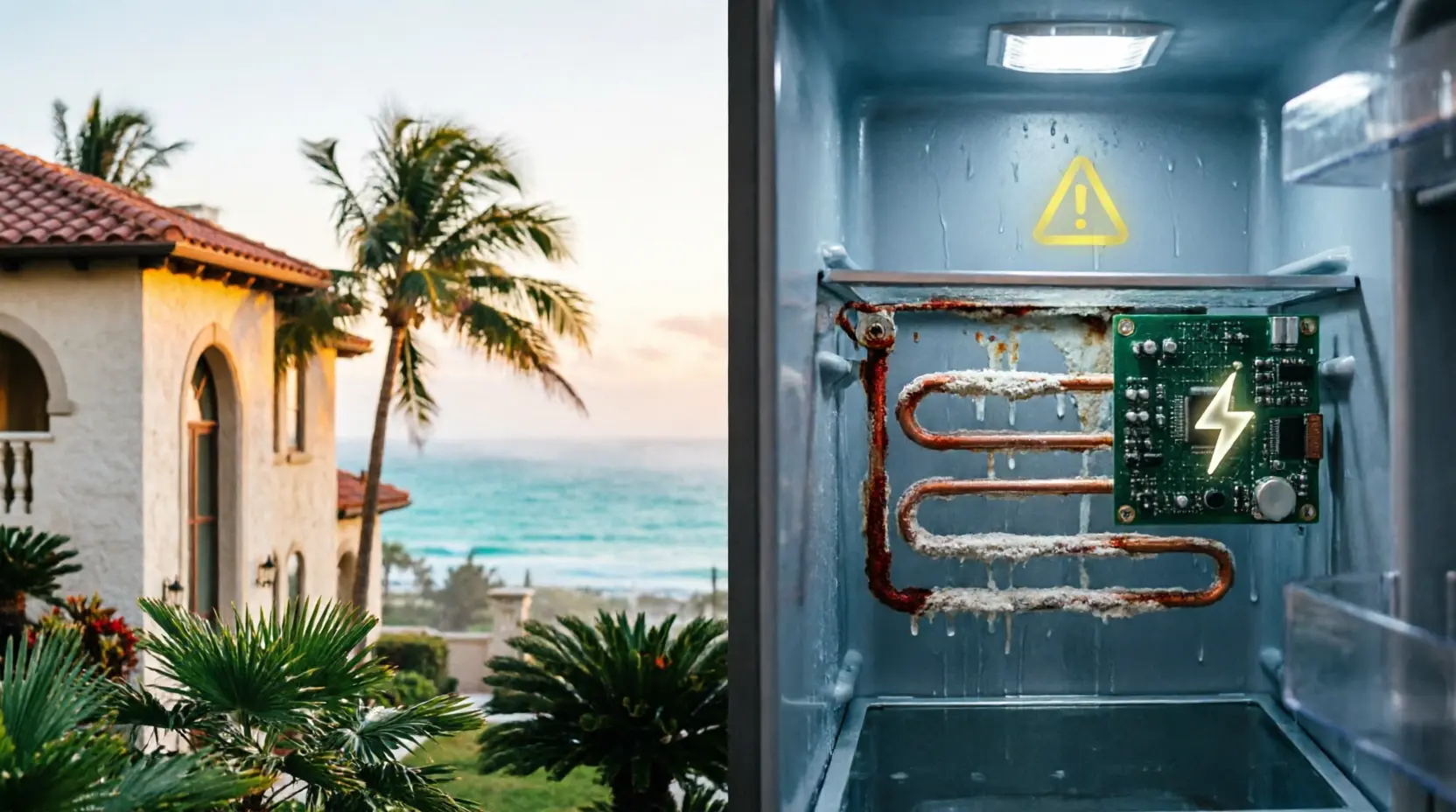
5 Appliance Warning Signs Jupiter FL Homeowners Should Never Ignore
Your appliance will almost always tell you something is wrong before it quits completely. The problem is most people do not know what to listen for, and in Jupiter FL the warning signs show up faster and look different than they do in a drier, inland climate. Salt air, humidity pushing 80 percent most of the year, hard water from Palm Beach County’s municipal supply, and the voltage spikes that come with summer storm season, all of these things push appliances toward failure in ways that just do not happen at the same rate in Orlando or Atlanta.
I have been opening up washers, refrigerators, dryers, and dishwashers across Jupiter, Tequesta, Abacoa, and Juno Beach for fifteen years. The number of service calls I have seen that could have been a $150 repair if someone caught it two months earlier, and turned into a $700 job or a full replacement instead, is honestly hard to count. This post covers the five warning signs that come up most often, what they usually mean in this specific climate, and what you should do about each one before it gets worse.
What This Post Covers
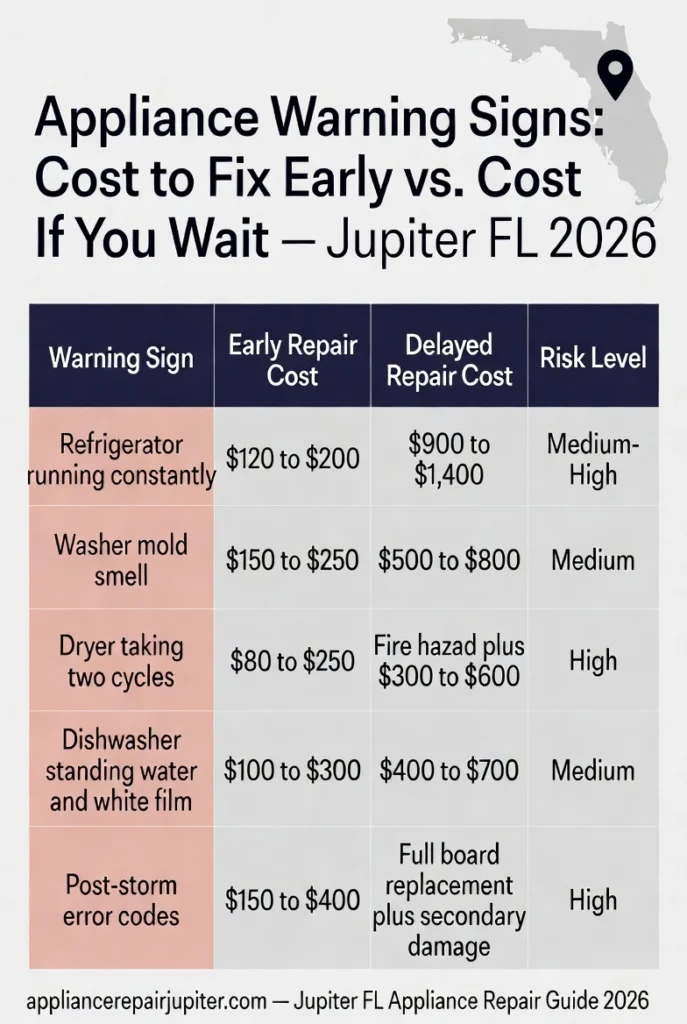
- A refrigerator that runs constantly in Jupiter FL’s humidity is usually signaling one of three fixable problems, but if you wait too long it becomes a compressor job.
- Front-load washers in coastal South Florida develop mold in the door gasket roughly twice as fast as washers in dry climates. This is a maintenance issue before it becomes a repair issue.
- A dryer that takes two cycles to dry a normal load is often an $80 to $150 fix. Left alone, it becomes a fire hazard.
- White residue and standing water in a dishwasher are both symptoms of Palm Beach County’s hard water working against the machine’s components, and both are fixable without replacing the unit.
- Post-storm error codes and tripped breakers are not always nothing. In Jupiter FL, surge damage to control boards is one of the most common repair calls from June through October.
Warning Sign #1: Your Refrigerator Runs Constantly or Makes a Clicking Sound When It Tries to Start
If your refrigerator is running all night without cycling off, or clicking each time it tries to restart, do not ignore either one. In Jupiter FL homes, a fridge that runs non-stop is almost always dealing with dirty condenser coils, a failing evaporator fan motor, or a compromised door seal. The clicking sound specifically points toward a struggling compressor, and that is the expensive one.
The condenser coils on the back or bottom of your refrigerator are supposed to release heat into the surrounding air. When those coils get coated in dust, pet hair, and the fine salt particulate that drifts in near the Inlet or from any coastal neighborhood in Jupiter, they stop releasing heat properly. The compressor has to work harder and longer to compensate. You feel this as the fridge running non-stop, and you see it on your electric bill.
Cleaning the coils takes about ten minutes and a coil brush or vacuum attachment. If you clean them twice a year, this warning sign usually goes away. A lot of homeowners in Tequesta and Juno Beach tell me they had no idea the coils could even be cleaned. Once you know, it is easy to add to the regular maintenance checklist.
The evaporator fan motor is the component that circulates cold air between the freezer and fridge compartments. When this motor starts to fail, the fridge runs longer to compensate for uneven cooling. You might also notice the freezer is fine but the fridge is warmer than it should be. This is a $120 to $200 parts and labor fix in most cases.
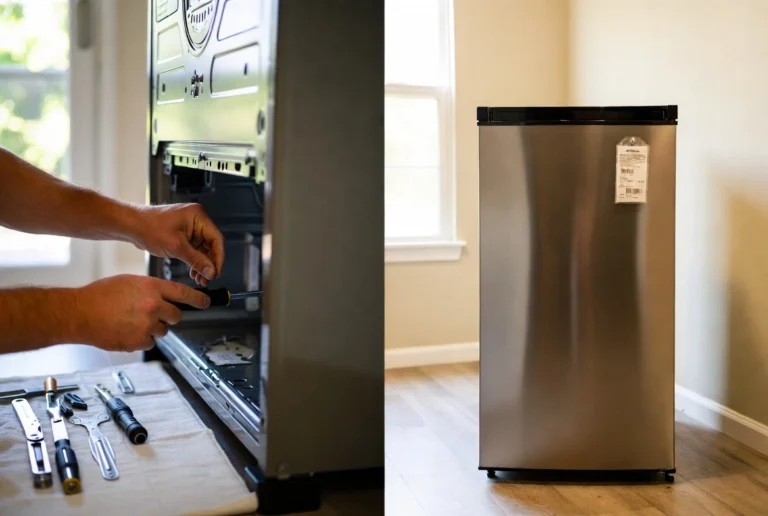
The clicking sound is different. That is often the compressor trying to start, failing, and trying again. If the compressor is struggling on a unit under eight years old, repair usually makes sense. On a unit older than ten, you are looking at a harder call. The cost estimator tool can help you run those numbers before you make any decisions.
Case Study — Abacoa, January 2024: A homeowner called about her GE side-by-side that had been running constantly for three weeks. She assumed it was normal for winter in Florida. When the tech arrived, the condenser coils were caked with dust and pet hair, and the door seal on the freezer side had a hairline crack letting warm humid air in. The repair came in at $195, which included new door gaskets on both doors. She had been quoted $1,400 for a replacement unit the week before. The refrigerator repair page covers what this type of job typically involves and what it costs in Jupiter FL right now.
What to do right now: Pull the fridge away from the wall and look at the coils. If they are coated, clean them. Close a dollar bill in the door and pull it out. If it slides out easily, the seal is weak and warm humid air is getting in. If either check turns up a problem, it is worth a call before the compressor gets involved.
Warning Sign #2: Your Front-Load Washer Smells Like Mold Even After You’ve Cleaned It
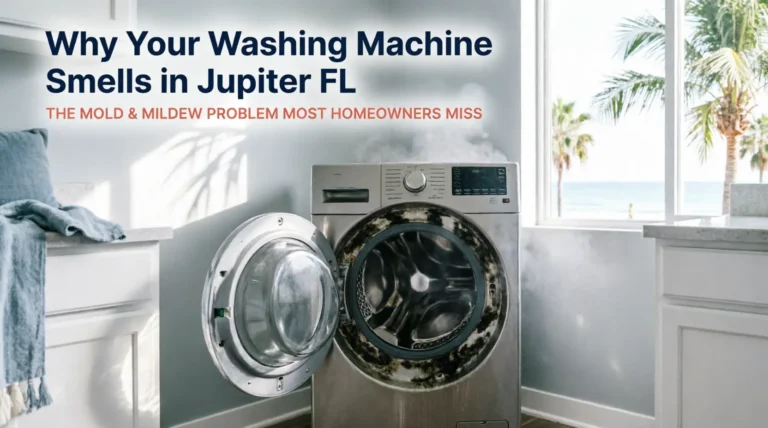
A front-load washer that smells like mildew even after running a cleaning cycle has mold growing somewhere the cleaning cycle cannot reach. In Jupiter FL’s humidity, this happens faster than most people expect, and it almost always means the door gasket, the detergent drawer cavity, or both need physical cleaning or replacement.
This is the warning sign I get more calls about from Abacoa townhomes and PGA National than almost anywhere else. Front-load washers trap moisture in the door gasket, which is that rubber accordion seal around the door opening. In a home with 78 to 85 percent ambient humidity, moisture does not evaporate from that seal the way it would in Phoenix or Denver. Mold starts growing inside the folds of the gasket within weeks if the door is kept closed between uses.
The fix sounds obvious: wipe down the gasket, leave the door open after every wash, use less detergent. That works in most cases if you catch it early. But if the smell persists after a few weeks of proper maintenance, the gasket has usually absorbed mold too deep to clean out. Replacement runs about $150 to $250 for parts and labor on most models.
LG and Samsung front-loaders are the ones I see this problem on most often in Jupiter. Not because they are bad machines, but because they are the most common brands in the area and the gasket design on their mid-range models traps moisture well. If you have an LG unit with this issue, the LG appliance repair section covers what to expect for your specific model.
There is also a harder conversation to have here. If the smell is coming from inside the drum, not just the gasket, you could be looking at mold that has gotten behind the drum seal. That is a more involved job. It does not necessarily mean you replace the machine, but it changes the repair math. Honestly, if a front-load washer is showing this problem after five years in a coastal home and the repair would run over $400, most people are better off replacing it with a top-load unit. Top-loaders do not have the gasket design issue.
Case Study — Jupiter Farms, Summer 2023: A couple bought a Samsung front-load washer in 2021. By mid-2023 it smelled bad enough that they were rewashing clothes. They had tried every cleaning tablet available. When the tech checked it, the gasket had mold penetrating the rubber itself, and there was visible mold on the back of the detergent drawer housing. New gasket, deep clean of the drawer cavity, a correct cleaning cycle: total repair at $215. The machine has been fine since. The washer repair page has cost context for similar jobs.
What to do right now: Pull back the door gasket folds and look inside. Black spots mean mold. Then pull out the detergent drawer completely and look at the cavity behind it. If you see growth in either place, start with physical cleaning before calling anyone. If it comes back within two weeks, the gasket needs to come out.
Warning Sign #3: Your Dryer Takes More Than One Cycle to Dry a Normal Load
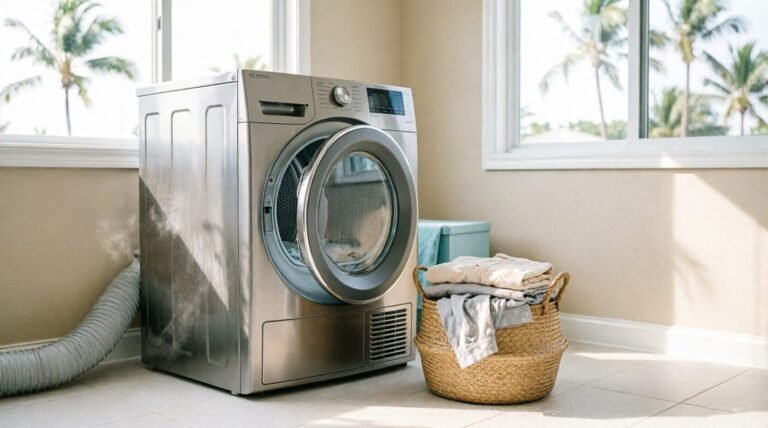
A dryer that cannot dry a full load in one cycle is either dealing with a blocked exhaust vent, a failing heating element, or a thermal fuse that has partially cut out. All three are fixable. None of them are safe to ignore, because a restricted dryer vent is a fire hazard, and in Jupiter FL the combination of humidity and lint buildup makes that hazard real.
This is the one people wait on the longest. It is easy to rationalize. You just throw the clothes back in. But here is what is happening inside the machine while that goes on for months: the heating element cycles off early to prevent overheating, because the restricted airflow is trapping heat in the drum. That heat cycles on and off, stresses the element, and eventually it fails completely.
The vent is the first thing to check. In Jupiter FL homes, especially older ranch-style properties in Jupiter Farms and homes near the Intracoastal, the vent run is often longer than manufacturer spec allows, or it uses a flex hose with too many bends. Every bend cuts airflow. A vent line that is technically installed correctly can still underperform if it is packed with lint. Dryer vent cleaning runs about $80 to $150 depending on the length of the run.
If the vent is clear and the dryer still takes forever, the heating element is next. On most residential electric dryers, a replacement heating element is $50 to $100 for the part. Labor brings it to $150 to $250 total. That is worth doing on any dryer under ten years old. More on what these jobs typically involve is on the dryer repair page.
The thermal fuse is a small safety component that trips when the dryer overheats. Once it trips, it usually stays tripped. The dryer either will not heat at all or heats very weakly. Replacing it is cheap, often under $100 including labor, but it is a sign that the underlying overheating issue still exists. Replacing the fuse without fixing the vent just means it trips again.
Case Study — North Palm Beach, August 2023: A homeowner called about his Whirlpool dryer taking three full cycles to dry a load of jeans. He had been living with it for four months. The tech found a vent that ran twenty-two feet with three ninety-degree bends, packed solid with lint. The cleaning took forty minutes. A new thermal fuse was also needed because the original had tripped from repeated overheating. Total cost: $185. That level of lint buildup is a real fire risk. The Whirlpool repair section covers this type of job if you want to know what to expect.
What to do right now: Go outside and find your dryer vent exhaust cap. Run the dryer and put your hand near the cap. You should feel strong, warm airflow. If it is weak or barely there, the vent is restricted. Also look at the hose behind the dryer. If it is a white or silver flex accordion hose that is kinked or crushed in any spot, that is your problem.
Warning Sign #4: Your Dishwasher Leaves Standing Water or White Film on Everything
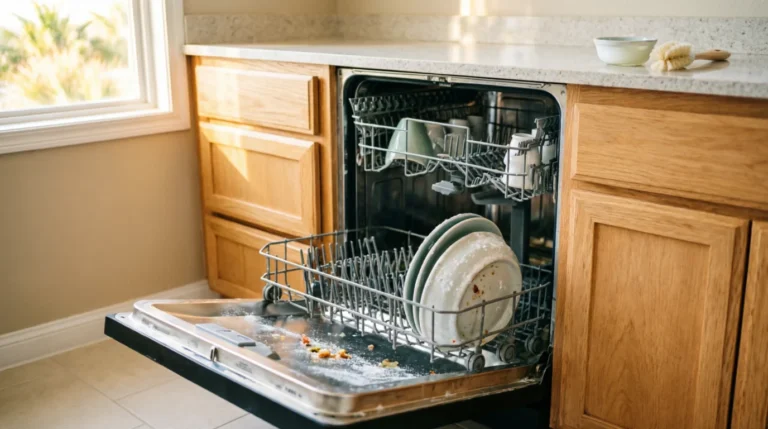
A dishwasher with standing water in the bottom after a full cycle has a blocked filter, a failing drain pump, or a clogged drain line. White residue on dishes is a separate issue caused by Palm Beach County’s hard water mineralizing on surfaces during the dry cycle. Both are signs the machine needs attention, but they need different fixes.
Start with the standing water, because that one has bigger consequences. A clogged dishwasher filter is something you can fix yourself. On most modern dishwashers, the filter is a twist-off cylinder in the bottom of the tub. Pull it out, rinse it under hot water, use a soft brush if the screen is coated with food particles, and put it back. In a Jupiter home where hard water is already taxing the machine, doing this once a month makes a real difference.
If the filter is clean and water is still sitting in the bottom after a full cycle, the drain pump is the next suspect. When the pump motor starts to fail, it cannot push water through the drain line fast enough to clear the tub. Depending on the brand, a drain pump replacement runs $120 to $280 including labor. On a dishwasher under eight years old, that is worth doing. The dishwasher repair section covers brand-specific cost ranges.
The white film is a harder conversation because the fix for it is ongoing, not a one-time repair. Palm Beach County’s water hardness runs between 180 and 250 parts per million depending on where in Jupiter you are and which municipal supply serves your neighborhood. At those levels, mineral deposits form on dishes and inside the machine during every wash cycle. A rinse aid dispenser helps significantly. Running a monthly cleaning cycle with a citric acid-based cleaner breaks up the buildup inside the spray arms and on the heating element.
The bigger concern with hard water is what it does to the spray arms over time. The tiny holes in the spray arms clog with mineral deposits, which means dishes get less water coverage each cycle. You might notice the back row of dishes not getting as clean as the front. This is usually a descaling job, not a parts replacement, but if the arms have been blocked long enough, they may need to come out. That is a $40 to $80 parts cost on most machines.
Case Study — Juno Beach, March 2024: A retired couple called about their Bosch dishwasher leaving water in the bottom and a chalky film on everything. They had assumed the machine was failing and were ready to buy a new one. The tech found a drain filter packed solid and spray arms completely blocked with mineral scale. Full cleaning and filter replacement: $165. The white film issue was resolved with a rinse aid setting adjustment and a proper citric acid cleaning cycle. No issues since. If you have a Bosch, the Bosch repair page has more specifics on what these jobs look like.
What to do right now: Open the dishwasher after a cycle and look in the bottom. If there is standing water, pull and clean the filter. While you are in there, take out the spray arms and hold them up to the light. If the holes are blocked, soak them in white vinegar for an hour and rinse them out.
Warning Sign #5: Any Appliance Trips a Breaker or Shows Error Codes After a Storm
An appliance that starts tripping breakers or showing error codes after a thunderstorm or FPL outage has likely taken a voltage spike through the circuit. In Jupiter FL, this is one of the most common causes of appliance control board failure from June through October, and it is almost always preventable with a proper surge protector.
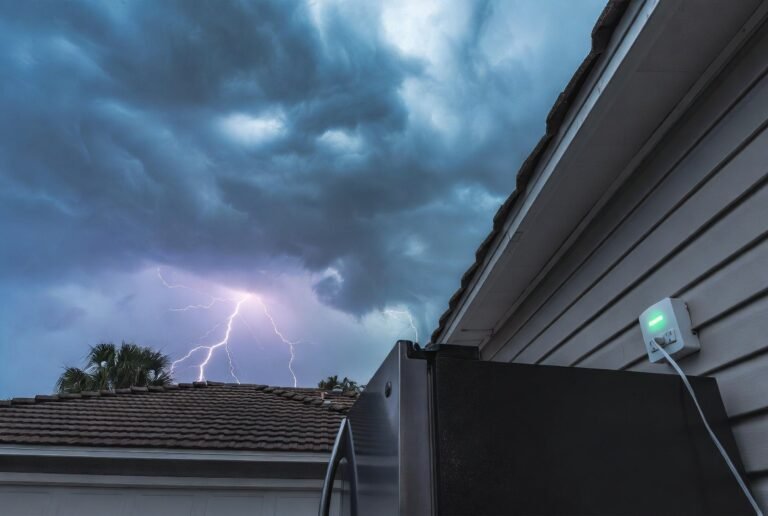
Jupiter’s summer storm pattern is intense and predictable. The convective storms that build off the Atlantic and roll through Palm Beach County in the afternoons bring lightning, and with lightning comes voltage spikes. FPL manages the grid well, but the spikes that happen in the microseconds between a strike and the grid protection engaging are enough to damage a circuit board. This is especially true for appliances with digital control panels: modern refrigerators, washing machines with electronic cycles, dishwashers with touch controls.
A control board replacement is not cheap. Depending on the appliance and brand, you are looking at $200 to $500 for the board alone, plus labor. On a refrigerator, a replacement main control board can run $400 to $600 installed. The appliance repair cost page has current ranges for the Jupiter FL market.
The surge protector conversation matters here. A standard power strip is not a surge protector. It is a power strip. A real whole-home surge protector, installed at the main panel by a licensed electrician, costs about $200 to $400 and protects every circuit in the house. Point-of-use surge protectors for individual appliances run $30 to $80 each and are well worth it for refrigerators, washers, and anything with a digital control board. FPL’s own resources on surge protection spell out the risk clearly for South Florida homeowners.
When an error code appears after a storm, the error code decoder tool can help you understand what the code actually means before you call anyone. Some codes are just the appliance resetting itself after a power interruption and will clear after a five-minute unplug. Others indicate real component damage that needs a tech.
Case Study — Abacoa, September 2024: During a storm week that followed a tropical system moving through Palm Beach County, four homeowners in Abacoa called within 48 hours of each other about appliances showing error codes they had never seen. All four had experienced the same FPL voltage event. Two were refrigerators with fried control boards ($380 and $440 in repairs), one was a Samsung washing machine with a damaged motor control unit ($295), and one was actually fine after a power cycle reset the system. The three that took damage all had appliances plugged into standard outlets with no surge protection. The Samsung repair section covers storm-related damage patterns specific to those units.
What to do right now: If an appliance is showing an error code after a storm, unplug it for five minutes and plug it back in. If the code clears, monitor it. If it returns, or if the appliance will not start at all, it needs a diagnostic. Check whether your major appliances are on surge-protected circuits. If they are not, fix that before the next storm comes through.
Why Jupiter FL’s Climate Makes All of These Show Up Faster Than They Should
Jupiter FL’s combination of salt air, coastal humidity, hard water, and a severe summer storm season puts appliances under pressure that manufacturer specs simply do not account for. Most appliance testing happens in controlled lab conditions, not in a place where ambient humidity runs above 78 percent year-round and the air near the Inlet carries salt particulate year-round.
Most appliance manufacturers test their products at around 50 percent relative humidity and 77 degrees Fahrenheit. In a Jupiter home through June, July, August, and September, you are running appliances at 88 to 95 degrees ambient temperature with humidity at 80 percent or higher on most days. That alone pushes a refrigerator compressor to work 15 to 20 percent harder than design spec. Over years, that adds up in wear that shows up on components long before the manufacturer’s expected lifespan.
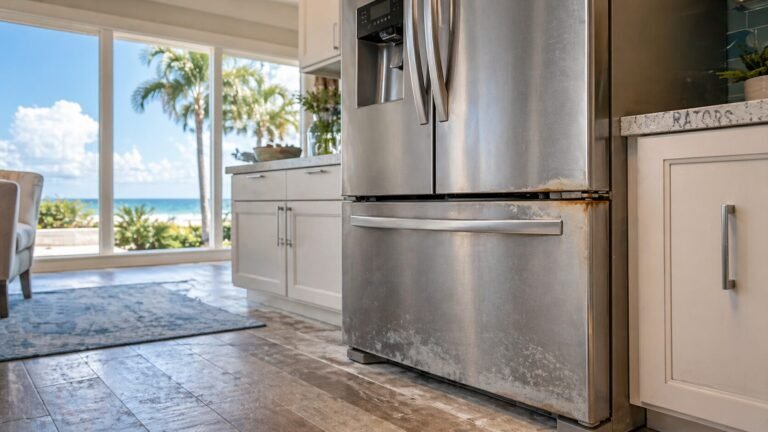
Salt air is the second variable. Homes within half a mile of the Jupiter Inlet, waterfront properties along the Intracoastal, and canal homes in Tequesta sit in the highest salt concentration zones. The salt accelerates corrosion on condenser coils, on refrigerator coil fins, on dishwasher pump housings, and on electrical connections inside the machines. I put together a detailed post on what salt air actually does to the inside of appliances in this area, because most people have no idea how fast it happens. The salt air appliance damage post has specifics and timelines by appliance type.
Palm Beach County’s water hardness compounds everything. A dishwasher running 250 ppm hard water every day is building mineral deposits on every water-contact component, every single wash. A washing machine running that water is scaling up the drum, the inlet valves, and the pump housing over time. These deposits reduce efficiency and eventually contribute to component failure. NOAA’s climate data for Southeast Florida documents the humidity and precipitation patterns that drive these effects across our county.
This is why the warning signs in Jupiter can show up on appliances that are three or four years old when they might not appear until seven or eight years in a different market. It is not a flaw in the machines. It is the environment. And it is why catching these signs early matters so much more here than it does almost anywhere else.
When to Call a Tech Right Away vs. When You Have a Little Time
Not every warning sign is an emergency. But some of them are, and knowing which is which saves both money and unnecessary stress.
Call the same day if:
- Your refrigerator or freezer stops cooling completely and you have food to protect
- Any appliance sparks, smells like burning, or trips the breaker every time you try to run it
- Your dryer smells like something is burning while it runs, or you see lint coming out around the machine
- Your dishwasher or washer is actively leaking onto the floor
You can wait a few days if:
- The fridge is running constantly but still cooling to the right temperature
- The washer smells bad but still completes its cycles fully
- The dryer is slow but not burning and your vent checked out clear
- The dishwasher has white residue on dishes but drains completely
The symptom diagnostic tool can help you assess urgency based on what you are seeing. It asks a few questions and gives you a realistic read on whether something needs a tech today or can wait a week.
If you are in any doubt, it is worth a quick call. Most of the time a tech can tell you over the phone whether it sounds urgent or whether it can wait a few days. Getting that wrong — treating something urgent as if it can wait — is where the expensive repairs come from.
Frequently Asked Questions
How do I know if my refrigerator warning signs in Jupiter FL are serious or minor?
Check two things: Is it still cooling food properly, and is it making any clicking or grinding noise? If it is cooling but just running longer than usual, you probably have a few weeks before it becomes urgent. If it is not cooling properly or clicking every few minutes, that is a same-day call.
Why do front-load washers develop mold so fast in Jupiter FL?
The door gasket design traps moisture, and Jupiter’s ambient humidity above 75 percent means that seal never fully dries out between washes. In a drier climate, the gasket air-dries between uses. Here it does not. Leaving the door open after every load is the single most effective thing you can do to slow it down.
Is it worth repairing an appliance that is more than ten years old in Palm Beach County?
It depends on what the repair is. A $150 drain pump on a ten-year-old dishwasher is usually worth it. A $600 compressor on a ten-year-old refrigerator usually is not. The general rule is if the repair costs more than 40 percent of what a replacement would cost, start shopping. The appliance lifespan guide has expected lifespans for each appliance type in Jupiter’s climate specifically.
What does it mean when my washer will not spin or drain in Jupiter FL?
This is almost always a drain pump failure, a lid switch issue on top-loaders, or a clogged drain filter. All three are fixable and none are expensive if you catch them before the motor burns out from strain. The washer spinning and draining page covers this in detail with cost ranges.
How much does a typical appliance repair cost in Jupiter FL right now?
For 2026, common repairs run: dryer vent cleaning $80 to $150, heating element replacement $150 to $250, refrigerator door gasket $120 to $200, dishwasher drain pump $150 to $280, washing machine door gasket $150 to $250, control board replacement $250 to $550 depending on brand and appliance. The cost estimator gives you a custom range based on your specific appliance and symptom.
What should I do right after a summer storm knocks out power to my Jupiter FL home?
When power comes back, turn appliances on one at a time and check for unusual noises, smells, or error codes. If something was running when the power went out, give it a few minutes before restarting it. If you see an error code, unplug the appliance for five minutes. If the code returns after that, call for a diagnostic.
Why is my dryer taking so long to dry clothes in South Florida’s humidity?
Ambient humidity makes it harder for the dryer to push moisture out of wet fabric, but if the dryer is dramatically slow, humidity alone is not the whole story. A blocked vent is almost always part of it. Check the exterior vent cap for strong airflow while the dryer is running, and inspect the hose behind the machine for kinks.
Can salt air really damage the inside of my appliances if I live near Jupiter Inlet?
Yes, and faster than most people expect. Salt particulate that gets into a home corrodes metal components inside appliances over time. Condenser coils, refrigerator coil fins, and electrical connections are the most vulnerable. This is not visible from outside the machine, which is part of why appliances in coastal homes wear out ahead of schedule. The post on what techs find inside coastal appliances has more on this.
My dishwasher smells bad but drains fine. Is this a repair issue or a maintenance issue?
Usually maintenance first. Remove and clean the filter, pull out the spray arms and clear the holes, run a citric acid cleaning cycle, and check the door seal for trapped food debris. If the smell comes back after all of that, the drain hose or pump housing may have buildup that needs professional cleaning.
Are there specific appliance brands that hold up better in Jupiter FL’s climate?
Brand matters less than maintenance frequency in this environment. That said, machines with simpler controls and fewer digital components tend to show fewer storm-related failures. Among the major brands, Maytag and Whirlpool models with traditional controls tend to hold up better than models with extensive touchscreen interfaces, because there are fewer circuit boards exposed to humidity and surge risk.
Is it safe to run my appliances during a Jupiter FL thunderstorm?
Running appliances during active lightning is risky if they are on unprotected circuits. If you do not have whole-home surge protection, unplug major appliances when storms are close. At minimum, refrigerators and washing machines should be on real point-of-use surge protectors, not standard power strips.
What is the most common appliance repair call in Jupiter FL during hurricane season?
Post-storm refrigerator and washing machine control board failures are at the top, followed by dryer issues from power interruptions mid-cycle. June through October is peak season for storm-related appliance calls across Palm Beach County, and most of them could have been prevented with surge protection.
How often should I have my appliances checked if I live in a coastal Jupiter home?
More often than the manufacturer recommends. For homes within a mile of the water, an annual check of refrigerator coils, dryer vent lines, and dishwasher filters is worth building into a routine. The maintenance checklist generator can build you a schedule based on what you have and where you live.
My appliance is still under warranty. Does that cover these kinds of warning signs?
It depends on the warranty type. Manufacturer warranties typically cover defective parts, not wear from environmental conditions. Extended warranties vary by plan. If your appliance is less than a year old and showing one of these warning signs, call the manufacturer’s support line first. If it is older and you bought an extended plan, read the exclusions section carefully before paying out of pocket.
Conclusion:
If you are reading this at 8pm because something stopped working or started making a noise it should not be making, that is a stressful place to be. Hopefully what is above gives you a clear sense of whether you are dealing with something to address yourself, something to schedule soon, or something that needs a tech out today.
If you want to get a local tech to take a look, reach out here and we will connect you with someone who knows Jupiter FL and what these machines deal with in this climate. No obligation. Just a straight answer from someone who has seen the inside of a lot of appliances in this exact zip code.
2 Comments