
How Coastal Humidity and Salt Air Damage Appliances in Jupiter FL — A Real Prevention Guide
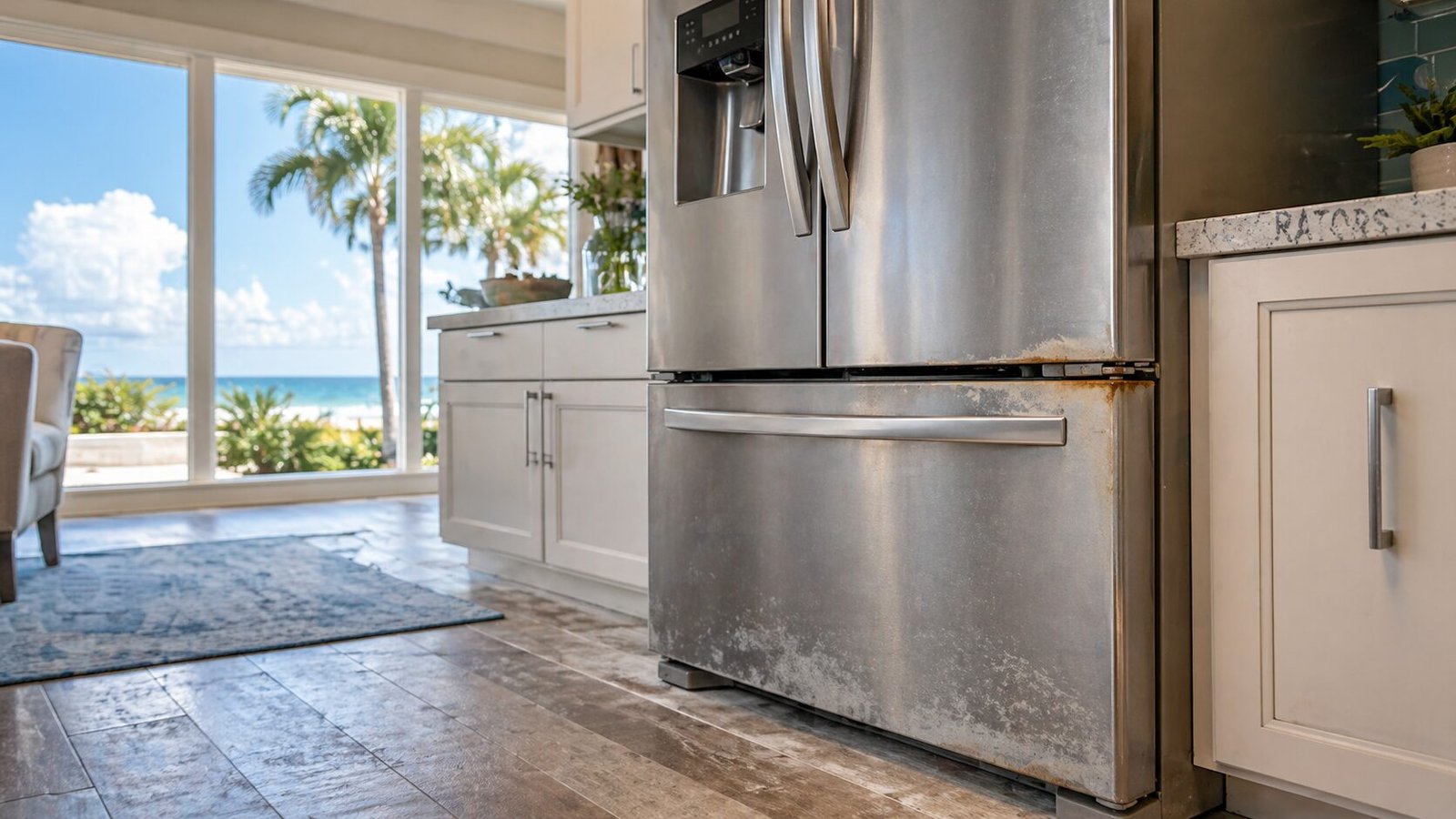
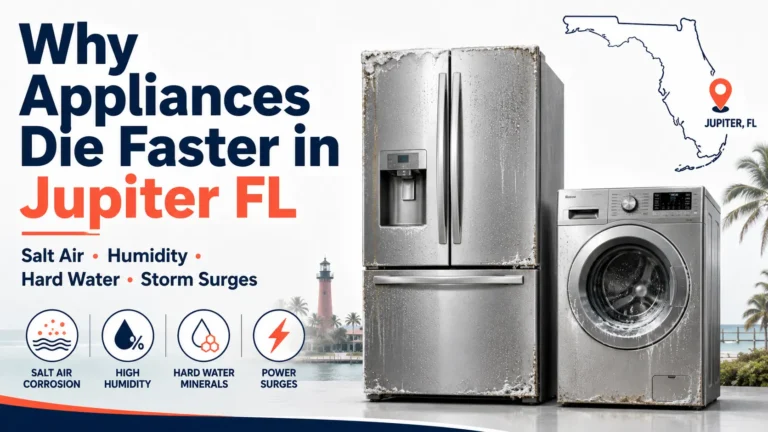
Living a few miles from the Atlantic sounds like a dream until your refrigerator dies in July, your washing machine starts leaving rust stains on clothes, and your dishwasher smells like the inside of a bait bucket. If you are a homeowner in Jupiter, Tequesta, or anywhere in northern Palm Beach County, salt air and humidity are not just weather facts — they are appliance killers working around the clock.
This guide is written from 15 years of pulling apart appliances all over Jupiter FL, from waterfront homes on Jupiter Island to neighborhoods closer to the Turnpike. The damage patterns are real. The prevention steps actually work. And the repair calls we get from people who wish they had read something like this first are unfortunately very common.
What You Will Learn Here
Salt air corrodes metal contacts and coils faster than most people realize. Humidity pushes motors and electronic boards past their limits during Florida’s long, brutal summers. The good news is that with the right maintenance habits, you can add years to every major appliance in your home.
Here is what this guide covers: how salt air actually attacks your appliances at a mechanical level, which appliances suffer the most in Jupiter’s climate, the early warning signs most homeowners ignore, a practical prevention plan that works in Palm Beach County’s specific conditions, and an honest breakdown of when repair makes sense versus when replacement is the smarter call.
If one of your appliances is already acting up, you can run a quick check with our appliance symptom diagnostic tool before reading further, or use our appliance error code decoder if you are seeing a blinking code on the display.
How Salt Air Actually Corrodes Your Appliances — and Why Jupiter FL Homes Are Especially Vulnerable
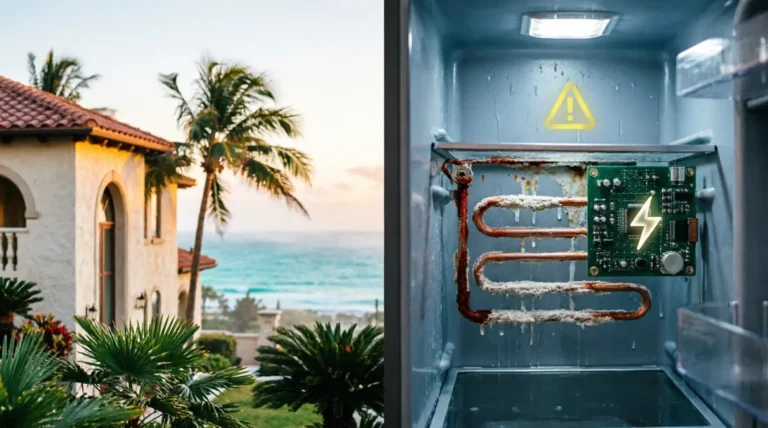
Salt air attacks appliances through a process called electrochemical corrosion. Sodium chloride particles suspended in coastal air settle on exposed metal surfaces, mix with moisture, and create a conductive solution that accelerates rust and oxidation dramatically faster than in inland environments. In Jupiter FL, where average relative humidity runs between 72% and 82% most of the year, this process runs essentially nonstop.
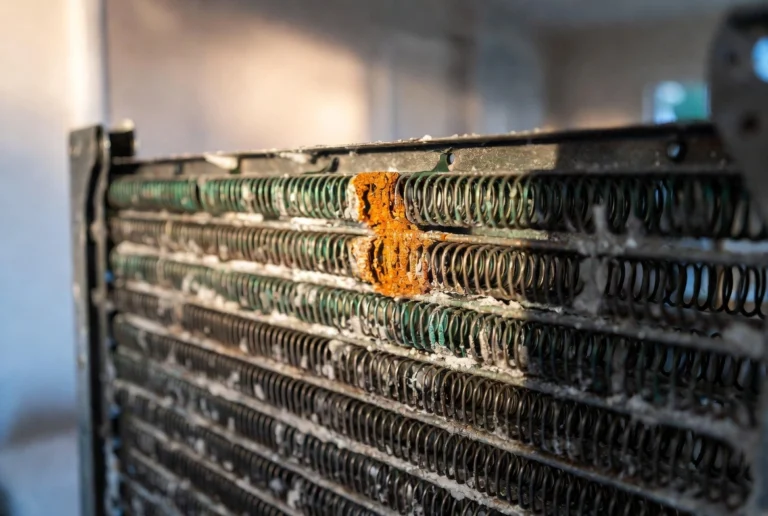
Here is what that actually looks like inside your machines. On a refrigerator compressor, the condenser coils — usually located at the back or underneath — are made of copper tubing with aluminum fins. Salt particles get pulled in by the condenser fan and coat those fins. Over months, the aluminum oxidizes and the fins collapse, reducing airflow. The compressor runs hotter and longer trying to compensate. Eventually it burns out.
On a washer or dryer, the steel cabinet and internal brackets start to rust from the inside out. The motor windings absorb humidity and the insulation degrades. Electronic control boards in modern LG, Samsung, and GE machines have surface-mount components that corrode at the solder joints, causing intermittent failures that can be maddening to diagnose.
The National Oceanic and Atmospheric Administration has documented that coastal environments within three miles of saltwater experience corrosion rates three to five times higher than inland areas. Jupiter’s position right on the Atlantic coast, combined with the prevailing onshore sea breeze that flows inland most afternoons, means even homes several miles west of A1A still get meaningful salt deposition. If you are in a waterfront community like Admirals Cove or on the Intracoastal, the exposure is significantly more intense.
Here is what actually happened at a home on Marcinski Road back in the summer of 2024. The homeowner, David R., had a three-year-old LG French door refrigerator that stopped cooling. When we pulled it out, the condenser coils were so packed with a gray, crusty buildup — a mix of salt, dust, and pet hair — that almost no air could flow through. The compressor had been running continuously for probably weeks. The coil cleaning alone took 45 minutes. Total repair bill was $189. If he had waited another two weeks, the compressor likely would have failed and the repair would have been $650 or more, or a full replacement.
Which Appliances Take the Hardest Hit in Jupiter’s Humidity
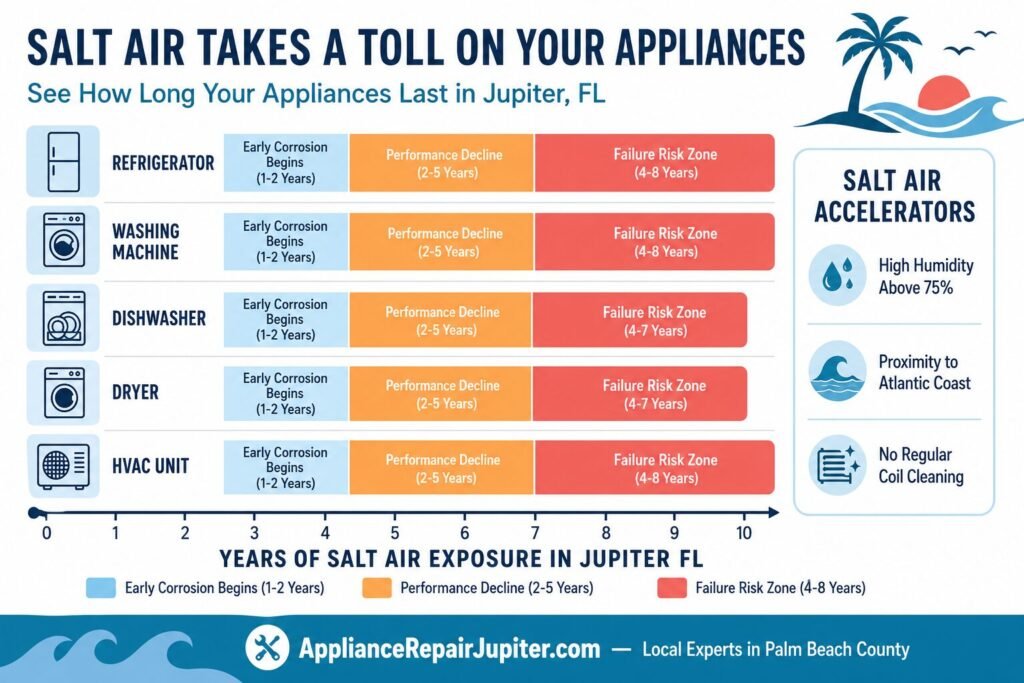
Refrigerators, dishwashers, ice makers, and washing machines are the appliances most damaged by coastal humidity and salt air in Jupiter FL. Refrigerators fail first because their condenser coils are constantly pulling in ambient air. Dishwashers deteriorate quickly because they combine salt air exposure with daily heat cycles and moisture. Ice makers and washing machines follow close behind due to water contact with corroding metal parts.
Let’s go through the list honestly.
- Refrigerators are the most common call we get, and the reason is always the same: the condenser system. Whether it is a Sub-Zero with a grille at the top, a Samsung with coils underneath, or a GE with a rear-mounted system, coastal air gets in and the coils suffer. If you have a refrigerator that is running loudly, struggling to maintain temperature, or cycling on and off constantly, salt buildup on the coils is likely the problem. Read more about the specific failure patterns we see on our refrigerator not cooling in Jupiter FL guide and check out our refrigerator repair Jupiter service page.
- Ice makers are in an interesting spot because they live inside the refrigerator, which you might think would protect them. But the water inlet valve, the fill tube, and the ice mold all have metal components that corrode. We pull out ice makers in Jupiter homes regularly and find the mold motor or the ejector arms seized with rust. Our ice maker repair Jupiter service handles these all the time.
- Dishwashers have a combination problem. The door seal traps humidity inside the tub between cycles. The heating element, water inlet valve, and spray arm brackets all corrode. The electronic control panel sits near a moisture-rich environment. Brands like Bosch and KitchenAid use stainless tubs which help, but the external cabinet and door hinges still rust. See our dishwasher repair Jupiter page if yours is having issues.
- Washing machines — specifically the drum bearings and motor brushes — absorb humidity and fail sooner in coastal climates. Front-loaders from LG and Samsung have door gaskets that trap salty moisture and breed mold. The control boards on high-efficiency models are sensitive to humidity and can throw error codes that seem random but are actually early corrosion damage. Our washer repair Jupiter team sees this pattern constantly.
- Dryers actually suffer more from lint buildup compounded by humidity than from direct corrosion, but the heating elements and thermal fuses in electric dryers still corrode in coastal homes. Gas dryers see burner igniter issues more often. You can learn more at our dryer repair Jupiter page.
- Wine coolers and beverage centers are surprisingly vulnerable. Their evaporator coils are small, they often sit in open entertainment areas that breathe coastal air freely, and homeowners rarely think to maintain them. Our wine cooler repair Jupiter service deals with compressor and coil failures in these units regularly.
A note on brands: in our experience, Viking and Sub-Zero refrigerators handle the coastal environment better than most consumer-grade units because their construction tolerances are tighter and their coatings are more corrosion-resistant. That said, even they need maintenance in Jupiter FL. GE and Whirlpool mid-range units are fine appliances but require more frequent attention here than they would in, say, Atlanta or Dallas.
The Warning Signs Most Jupiter Homeowners Miss Until It Is Too Late
Salt air and humidity damage builds slowly and quietly before it causes an obvious failure. The warning signs include appliances running louder than normal, unusual odors, higher-than-normal electric bills, condensation in unexpected places, and food or ice quality changes. Catching these early in Jupiter FL can be the difference between a $150 service call and a $1,200 replacement.
Here is the honest list of what to watch for:
- Your refrigerator is running almost constantly. You should be able to hear it cycle on and off through the day. If the compressor sounds like it never stops, the condenser coils are likely blocked.
- Your electric bill went up without explanation. A refrigerator with failing coils or a dryer with a clogged vent can add $30 to $70 per month to your power bill. Florida Power and Light has noted that inefficient appliances are among the leading contributors to unexplained bill increases in South Florida homes.
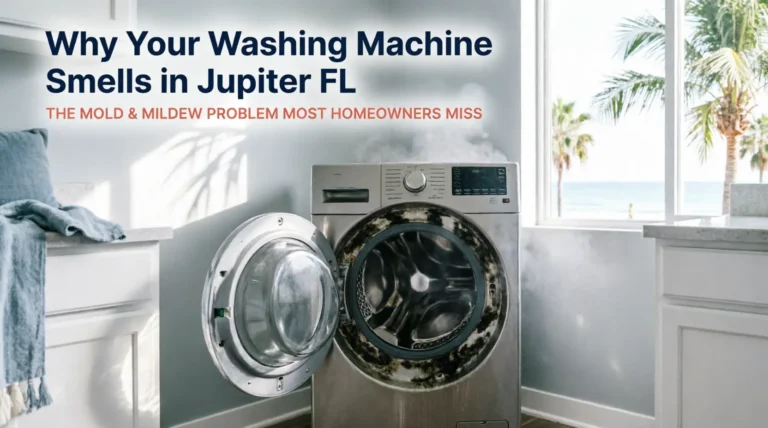
- Your washer or dryer smells musty even after running a clean cycle. That is mold, and in a humid Jupiter home it gets inside the drum, the gasket, and the drain pump filter fast.
- Your dishwasher leaves a white, chalky film on glasses. Some of this is water hardness, but in coastal homes it is also salt residue getting into the water supply through a corroding inlet valve.
- Your ice tastes off. This is almost always a sign that the ice maker water filter is overdue, the fill tube is corroding, or the ice mold itself has started to degrade.
- Your appliance throws an error code you have never seen before. Do not ignore this. Run it through our appliance error code decoder — many of these codes are the machine telling you something humidity-related is wrong before a full failure happens.
One more thing worth mentioning: if you bought a home in Jupiter and the appliances came with the house, have them inspected before assuming they are fine. We visited a home in Abacoa in March 2025 where a couple had moved from Ohio and inherited a 6-year-old Samsung refrigerator and a Whirlpool washer. Both looked clean from the outside. Both had significant internal corrosion that the sellers had masked with cleaning. The fridge needed new coils and a condenser fan. The washer bearings were nearly gone. Total cost to catch it early: $340. Cost if they had waited for the inevitable failure: easily double.
A Prevention Plan That Actually Works in Jupiter FL
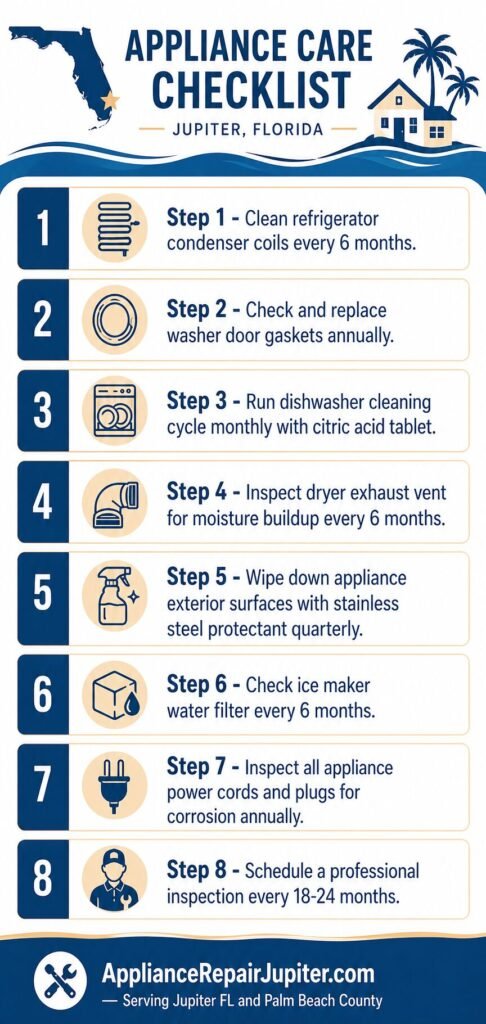
The most effective way to protect appliances from coastal salt air in Jupiter is a combination of regular coil cleaning, humidity management inside the home, door seal maintenance, and annual professional inspections. Homeowners who follow a consistent schedule extend appliance life by three to five years on average compared to those who do nothing until something breaks.
Here is the practical plan, broken down by appliance and frequency.
Every 6 months: Pull your refrigerator out from the wall and vacuum the condenser coils. On most GE, LG, and Whirlpool refrigerators, the coils are underneath behind a kick plate. On some older models they are on the back. Use a coil cleaning brush — they cost about $12 at any hardware store — and a vacuum. This one task alone will prevent the majority of compressor failures we see in coastal Jupiter homes.
While you are back there, look at the condenser fan blades. If they have a visible gray-white coating, that is salt and dust. Clean them gently.
Check the ice maker water filter every six months too. Samsung and LG have filter-change indicators, but those are based on water volume, not contamination level. In coastal Florida, the filter can clog faster. If your ice has any off-taste, just change it.
Every month: Run a dishwasher cleaning cycle. Use a citric acid-based cleaner like Affresh or plain citric acid powder. This prevents mineral and salt buildup on the spray arms and the interior walls.
Check your washer door gasket if you have a front-loader. Pull back the gasket lip and look for black mold spots or rust stains from the metal ring underneath. A corroded retaining ring will eventually tear the gasket and lead to water leaks.
Every year: Have your dryer vent inspected and cleaned if you have not. In Jupiter’s humid climate, dryer vents accumulate moist lint faster than in dry climates, and that creates both a fire risk and a dryer efficiency problem.
Inspect all appliance power cords where they connect to the back of the unit. Salt air can corrode the plug prongs and the inlet connectors, creating resistance that generates heat. It is rare, but we have seen this be a fire hazard in older homes near the Intracoastal.
Use a good stainless steel protectant on the exterior of stainless appliances. Products like Weiman Stainless Steel Cleaner leave a thin protective coating that slows salt deposition. It is not a miracle solution but it does make a noticeable difference over time.
Every 18 to 24 months: Have a qualified technician do a full inspection. Not a sales call. An actual inspection where they pull coils, check motor amp draw, test door seals with a dollar bill test, and look at control board connections. Use our appliance maintenance checklist generator to print a customized list for your specific appliances before the technician arrives.
One case worth sharing: Sandra M. in Palm Beach Gardens started a biannual maintenance schedule in January 2024 after we repaired her GE Profile refrigerator. At the 18-month check in July 2025, we found early corrosion on her dishwasher’s water inlet valve — caught it before it failed and flooded her kitchen. The preventive repair was $95. The dishwasher is still running fine. Flood remediation in a Palm Beach County kitchen averages $4,000 to $8,000 according to local restoration contractors.
You can get an instant estimate for any repair or maintenance service with our appliance repair cost estimator before you call.
Repair or Replace? How to Think Through It in a Coastal Florida Home
In Jupiter FL, the repair-vs-replace decision for salt-damaged appliances depends on the appliance age, the type of damage, and the replacement cost. As a general rule, if the repair costs more than 50% of the replacement cost and the appliance is more than 7 years old, replacement is usually the better financial decision. For appliances under 5 years old, almost any repair is worth doing.
Here is a more specific breakdown by appliance:
- A refrigerator under 8 years old with a condenser coil or fan issue is almost always worth repairing. Those are $150 to $350 repairs on most brands. A compressor replacement on a refrigerator 5 to 9 years old is a harder call — compressors run $500 to $900 with labor, and if you are already replacing the compressor on a salt-air-exposed unit, you may be replacing the control board within a few years too.
- A dishwasher over 10 years old with a failed pump or control board is typically worth replacing. New dishwashers in the $600 to $900 range have significantly better efficiency ratings, and the repair cost for a control board is often $250 to $400 on older units.
- For washing machines, the sweet spot is: under 6 years old, repair almost anything. 6 to 10 years, repair if it is under $300. Over 10 years with drum bearing failure, replace.
The honest reality in coastal Palm Beach County is that appliances here do not last as long as the manufacturer’s average lifespan suggests, because those averages are based on inland homes in moderate climates. A refrigerator rated for 13 to 17 years will typically last 9 to 12 years with no maintenance in Jupiter. With good maintenance, you can push it to 14 years or more.
James T. in Jupiter Farms learned this the hard way in September 2024. He had a 9-year-old Samsung washing machine that started making a grinding noise. A competitor told him it needed drum bearings and a new spider arm — a $620 repair. He called us for a second opinion. We confirmed the bearings, but also found the motor windings were showing humidity damage. Our recommendation was honest: at 9 years old, $620 in repairs on a machine with additional wear is not a good value. He bought a new LG unit and has been happy since. We would rather tell you the truth than take your money on a doomed repair.
Frequently Asked Questions
How does humidity affect appliances in Jupiter FL?
High humidity, which regularly sits above 75% in Jupiter and Palm Beach County, causes condensation to form on metal surfaces inside appliances. This leads to rust on steel components, mold growth in washers and dishwashers, and corrosion on electronic control boards. Over time, the affected parts fail faster than they would in a drier climate.
How far from the ocean does salt air still cause appliance damage?
In Jupiter FL, salt air effects are measurable up to about five miles inland from the Atlantic coast, according to NOAA coastal corrosion data. The effect is strongest within one to two miles. Homes on the Intracoastal also see significant salt exposure from tidal evaporation.
How often should I clean my refrigerator coils in a coastal Florida home?
Every six months is the right interval for Jupiter FL homeowners. Inland, once a year is typical. The combination of salt particles and humidity means coils clog faster here, and a blocked condenser is the leading cause of refrigerator compressor failure.
Can salt air damage smart appliances differently than older models?
Yes. Smart appliances from Samsung, LG, and GE have more electronic components including Wi-Fi modules, touchscreen boards, and sensor arrays. These components are more sensitive to humidity and salt corrosion than the simpler mechanical controls in older machines. Control board failures are the fastest-growing category of repair call we see in Jupiter FL.
Why does my ice taste bad even with a new filter?
If the ice still tastes off after a filter change, the problem is likely the ice mold, the water inlet valve, or the fill tube — not the filter. All three are metal components that corrode in coastal environments. Our ice maker repair Jupiter team can diagnose this quickly.
Is it worth buying an extended warranty on appliances in Jupiter FL?
Honestly, more so than in inland states. Appliances in coastal Florida fail earlier. Manufacturer warranties typically cover 1 year parts and labor. Extended warranties from the retailer or a third-party provider can make sense for refrigerators and washers, but read the exclusions — many do not cover cosmetic corrosion or failures they classify as environmental. Ask specifically about salt air and humidity before you sign.
What appliance brand holds up best in coastal Florida?
In our experience, Sub-Zero and Viking refrigerators have the best corrosion resistance due to their build quality and tighter tolerances. Bosch dishwashers outperform most others in humid environments. LG front-load washers are solid but need regular gasket maintenance. No brand is immune — maintenance habits matter more than brand selection in the long run.
What causes a washing machine to smell like mildew in Jupiter FL?
The door gasket on front-load washers traps salty, humid air and residual moisture between cycles. Mold grows rapidly in Florida’s heat. The fix is a monthly cleaning cycle with an Affresh tablet and wiping the gasket dry after every load. If the gasket is already visibly moldy, a replacement is probably needed. Visit our washer repair Jupiter page for more details.
Does homeowner’s insurance cover salt air appliance damage?
Typically no. Standard homeowner’s policies in Florida cover sudden and accidental damage, not gradual corrosion. Salt air damage is classified as wear and tear. A few specialty coastal home insurance policies do cover it — check with your agent about any corrosion riders or endorsements.
How do I know if my appliance failure is salt air related or just normal wear?
The clearest indicator is corrosion that is heavier than you would expect for the appliance’s age. If a 4-year-old dishwasher has significant rust on the door hinge brackets, or a 5-year-old refrigerator has badly corroded condenser fins, that is coastal exposure accelerating the timeline. Our appliance symptom diagnostic tool can help you identify the likely cause before you call.
Can I prevent rust on my appliance exteriors?
Yes. Use a stainless steel protectant spray quarterly on any stainless surfaces. For painted surfaces, wax-based automotive protectants work well. Make sure appliances are not stored where they have direct contact with concrete floors without a rubber mat underneath — concrete wicks moisture and accelerates rust on the bottom panels.
Should I run a dehumidifier in my utility room where the washer and dryer are?
If your laundry area is not climate controlled, absolutely yes. Keeping the relative humidity in that space below 60% will meaningfully slow corrosion on both machines. A portable dehumidifier costs $150 to $250 and can add years to your appliances. The EPA recommends maintaining indoor humidity between 30% and 50% for home health generally.
Taking Care of Your Appliances in Jupiter Is a Different Game
Appliances in coastal Palm Beach County live in a different environment than they were designed for. That is not a reason to be frustrated — it is just a reason to be more intentional about maintenance.
The homeowners who have the fewest expensive repair calls are not the ones with the newest appliances or the fanciest brands. They are the ones who clean their coils twice a year, check their gaskets, run their maintenance cycles, and call someone when something sounds wrong instead of hoping it will fix itself.
If you have noticed any of the warning signs in this guide — a refrigerator running constantly, a musty washer, ice that tastes off — we do same-day and next-day service throughout Jupiter FL and Palm Beach County, with upfront pricing before we start any work. There are no surprises on the invoice.
Browse our frequently asked questions if you want more detail on specific situations, or read a bit more about our team if you want to know who you are calling. When you are ready, the contact page makes it easy to schedule.
Salt air is relentless. But it does not have to win.
External Sources Referenced:
- NOAA Coastal Corrosion Research: oceanservice.noaa.gov
- EPA Indoor Humidity Guidance: epa.gov/mold/mold-course-chapter-2
- U.S. Department of Energy Appliance Efficiency Standards: energy.gov/energysaver/appliances-electronics
3 Comments