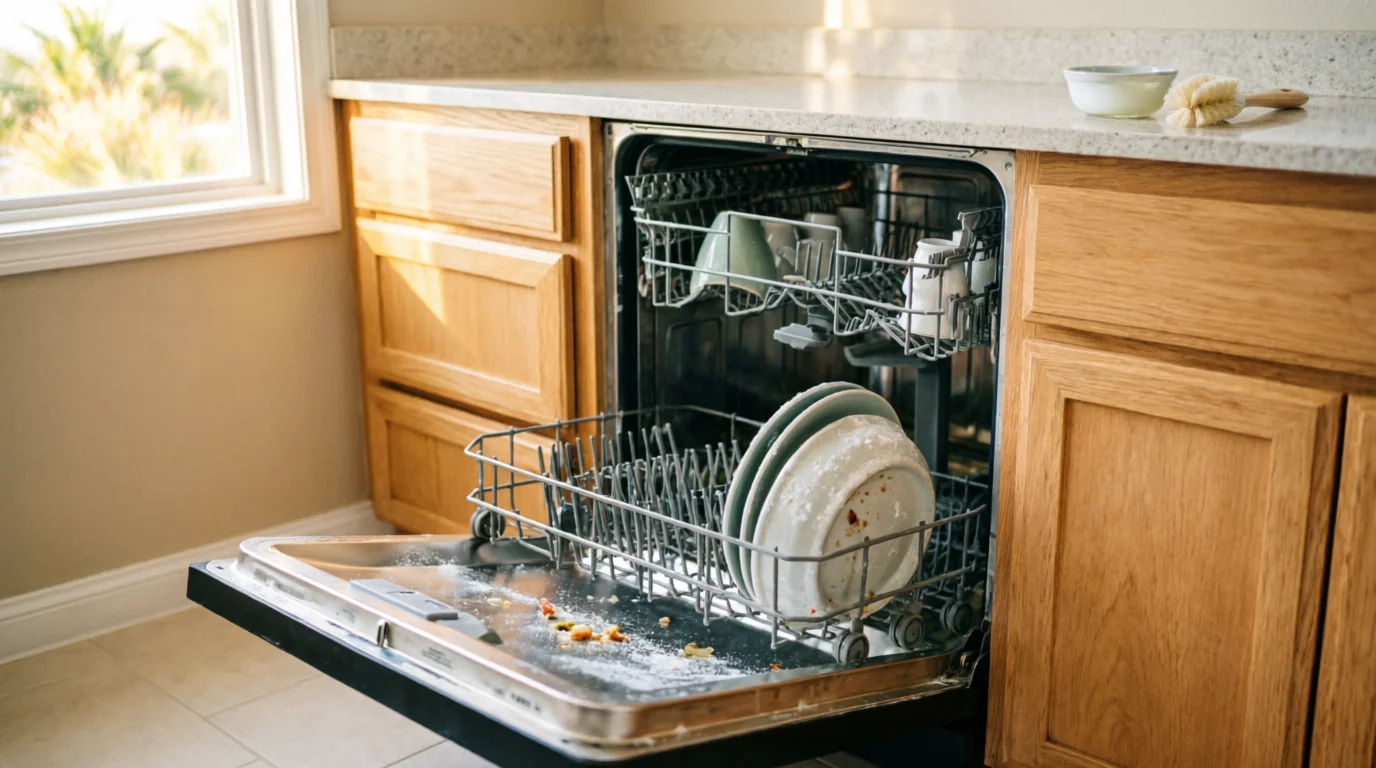
Dishwasher Not Cleaning Properly in Jupiter FL? Here’s What Usually Causes It
If your dishwasher ran a full cycle and your dishes came out with food still stuck to them, the cause is almost always one of three things: clogged spray arms, a dirty filter, or a water temperature problem. Two of those you can check yourself right now without any tools. The third one needs a tech, but you will know which situation you are in before you make that call.
The reason this happens more often in Jupiter FL than in most other parts of the country comes down to Palm Beach County’s water supply. The municipal water here runs between 180 and 250 parts per million of hardness, which puts it firmly in the very hard category. That mineral load builds up inside your dishwasher over months and years in ways that are not obvious until the machine stops doing its job. Add in the coastal humidity averaging around 78 percent year-round and the salt air that gets into everything near the Jupiter Inlet, and you have a set of conditions that push appliances harder than the manufacturers ever tested for.
This post covers every major cause of dishwasher cleaning failure, from the ones you can fix in five minutes to the ones that mean something mechanical has given out. By the time you finish reading, you will know exactly what you are dealing with and what to do about it.
What This Post Covers
- The most common cause of poor cleaning in Jupiter FL dishwashers is mineral scale from Palm Beach County’s hard water, which averages 180 to 250 parts per million. It blocks spray arms, coats the heating element, and reduces wash pressure.
- A clogged filter is the second most common cause and one most homeowners have never addressed, even after years of daily use.
- Water temperature below 120°F prevents detergent from dissolving properly. If your water heater is set too low, your dishwasher cannot compensate.
- Salt air and humidity near the coast accelerate corrosion of internal components, particularly control boards, door switches, and wire connectors, faster than manufacturer ratings account for.
- Most of these problems are diagnosable yourself in 15 to 20 minutes. If the issue involves a water inlet valve, wash pump, or control board, that is when a tech makes sense.
Why Jupiter’s Hard Water Is Your Dishwasher’s Worst Enemy
Palm Beach County water hardness is one of the highest in Southeast Florida. At 180 to 250 ppm, it leaves mineral deposits inside spray arms, filters, and heating elements over time. Those deposits cut water flow, reduce cleaning performance, and eventually cause part failures that are expensive to fix and easy to prevent with regular maintenance.
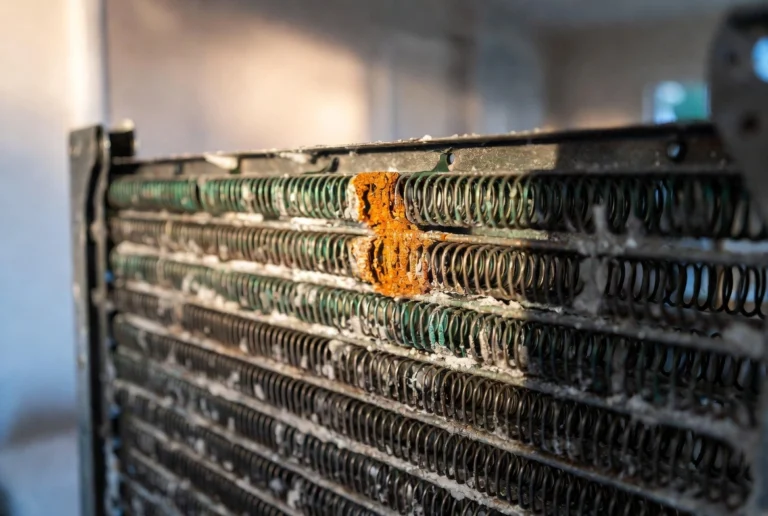
Most homeowners in Jupiter already know they have hard water because of the spots on their shower glass and the film on their faucets. The same thing is happening inside your dishwasher, but you cannot see it until the machine stops cleaning well. Calcium and magnesium from the water bond to every internal surface they touch during each wash cycle. Over months, that buildup restricts the small holes in your spray arms, coats the heating element, and deposits a white film on dishes that makes them look like they were never washed at all.
This is not a flaw in your dishwasher. It is a water quality problem that affects every machine in the area. The difference between homeowners who have clean dishes and those who do not is usually just a simple monthly maintenance habit.
Running a dishwasher cleaning cycle once a month with a citric acid-based cleaner or a commercial descaler like Affresh dissolves the mineral scale that builds up in places you cannot reach by hand. Put it in the bottom of an empty machine and run the hottest cycle available. If you have never done this and your dishwasher has been running for more than a year or two, start there before anything else.
Homes in Abacoa and Tequesta with whole-home water softening systems tend to see fewer hard water problems, but only if the softener salt tank is maintained. When the salt runs low, the system stops working and the hard water hits your appliances directly without any filtering.
Case study: In October last year, a homeowner in Juno Beach contacted us about her Bosch 500 Series that had been getting progressively worse over about eight months. She ran it every night and the dishes were coming out cloudy with visible food residue on the bottom rack. When the tech arrived, the heating element was coated in roughly a quarter inch of calcium scale and all six spray arm holes on the lower arm were completely blocked. Two hours of descaling treatment and a thorough spray arm cleaning brought the machine back to full performance. No parts needed replacing. The total came to $195. She had been days away from purchasing a new dishwasher she did not need.
If you want to understand what this kind of buildup looks like across different appliance types in coastal homes, the post on what techs actually find inside machines near the Inlet is worth reading.
The First Thing to Check: Your Dishwasher Filter
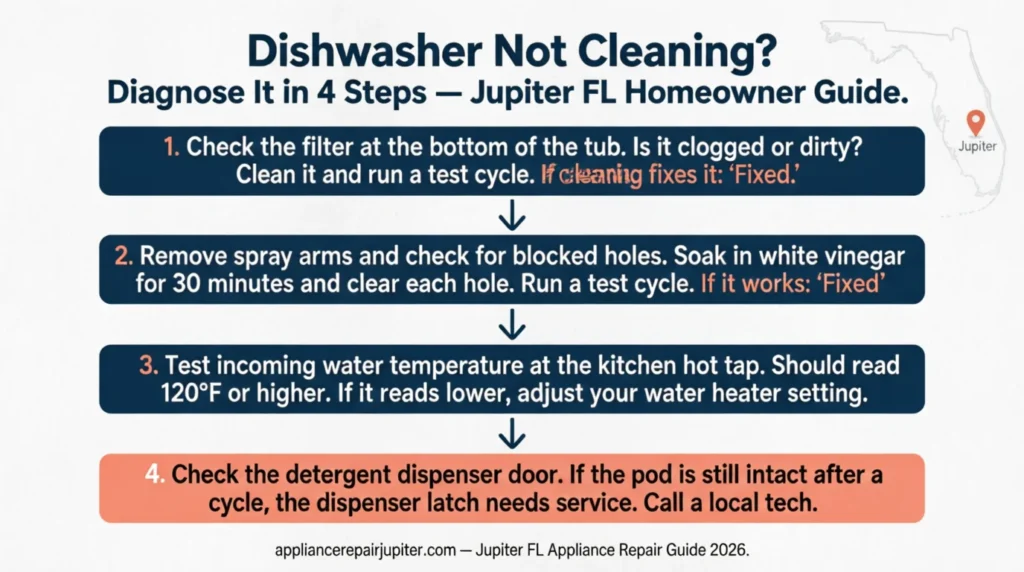
Most dishwashers made after 2010 have a manual filter at the bottom of the tub that needs regular cleaning. If you have never cleaned yours, that is almost certainly contributing to your problem. A clogged filter recirculates dirty water through the machine instead of draining it, which means your dishes are getting washed in water that is already contaminated.
Pull out the bottom rack and look at the floor of the dishwasher. You will see a cylindrical filter housing, usually in the center or toward the rear of the tub. On most Bosch, LG, and Whirlpool models, it twists out counterclockwise. On some older GE machines, there is a flat mesh screen that lifts out instead. Check your owner’s manual if you are not sure which type you have.
Rinse the filter under warm running water and use a soft brush to clear any debris. If it has not been cleaned in a while, soak it in warm soapy water for ten minutes first. The amount of buildup that accumulates in there surprises almost everyone who does this for the first time.
Bosch and Miele both recommend cleaning the filter every 30 days. Most homeowners do it never. In Jupiter’s humidity, food particles and trapped moisture create conditions where the filter not only clogs but also develops odor-causing bacteria growth. If your dishwasher smells bad and is not cleaning well, the filter is almost always involved in both problems.
Case study: Earlier this year, a couple in a Jupiter Farms ranch home called because their Samsung dishwasher had started leaving what they described as a gritty film on everything. The tech found the filter had not been cleaned in the four years they had owned the home. It was completely packed with food debris and mineral scale. Cleaning the filter and running a descaling cycle resolved the problem entirely. No repair was needed. They were finished in under an hour for $89. The tech walked them through how to do the cleaning themselves going forward.
Clogged Spray Arms: the Most Misdiagnosed Dishwasher Problem in Florida
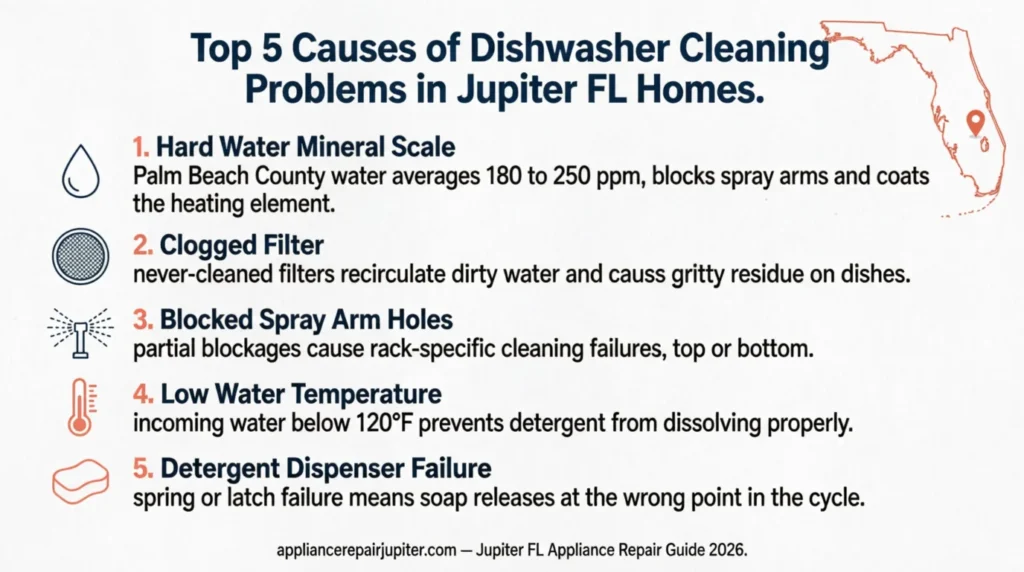
When spray arm holes get blocked by mineral deposits or food debris, water cannot distribute evenly through the tub. This is why one rack cleans well while the other does not. The top rack gets its water from the upper arm and the bottom rack from the lower arm. A blockage in either arm explains almost every rack-specific cleaning complaint.
Most dishwashers have two or three spray arms, the rotating pieces with small holes that spin and spray water during the wash cycle. In Palm Beach County’s hard water, those holes are the first place mineral scale accumulates. When even two or three holes on an arm get blocked, the water pressure and spray pattern change enough to leave an entire section of the tub under-cleaned.
To check this yourself: remove both spray arms (they typically unclip or unscrew from the center post), hold them up to a light source, and look through each hole. If you can see through all of them cleanly, they are fine. If any holes are partially or fully blocked, soak the arms in white vinegar for 30 minutes and use a toothpick or thin wire to clear each hole. Rinse well before reinstalling.
If you have an LG or Samsung unit and the top rack specifically is not cleaning, also check whether the upper spray arm connection at the door frame has mineral buildup blocking the water supply port. This is one of the more common Florida-specific issues with those brands. The LG repair page covers how these machines hold up in coastal conditions, and the Samsung repair page has similar brand-specific notes.
For Bosch owners, the spray arm design tends to be more resistant to clogging, but the machine still needs the same maintenance. Bosch dishwashers generally hold up well in Jupiter’s climate, particularly on the structural and motor side, but hard water does not spare them either.
Case study: Last March, a homeowner in a PGA National estate called about her Whirlpool dishwasher. The bottom rack was cleaning fine but the top rack consistently came out with food on glasses and mugs. The tech found the upper spray arm was rotating freely but three of its eight holes were fully blocked with calcium. A 20-minute cleaning cleared the blockage and the top rack performed normally on the next test cycle. The call cost $130 total. The homeowner had assumed the machine needed a new wash pump, which would have run $280 to $350 in parts alone.
Water Temperature and Why Your Dishwasher Isn’t Getting Hot Enough
Most dishwashers need incoming water at or above 120°F to clean effectively and dissolve detergent properly. If your home’s water heater is set too low or the internal heating element is coated in scale, detergent may not dissolve at all during the wash cycle. The result looks exactly like a spray arm or filter problem, which is why this one gets missed.
A lot of homeowners assume the dishwasher heats its own water from scratch. Some newer units do, but most residential dishwashers are designed to boost incoming water temperature by a modest amount, not heat cold water from scratch. If your supply water is only 100 to 110 degrees, the machine cannot make up that gap effectively.
You can check your incoming water temperature yourself. Run the kitchen hot water tap for about a minute, then fill a glass and check it with a cooking thermometer. If it reads below 118 to 120 degrees, that is part of your problem. The Department of Energy recommends water heaters be set to at least 120°F for both sanitation and appliance performance. If your heater is set lower to save energy, raising it slightly is worth the difference on your bill.
The other half of this issue is the internal heating element itself. In homes near the Jupiter Inlet, along the Intracoastal Waterway, and on waterfront properties in Tequesta, the heating element is one of the first components to show significant scale accumulation. A coated element cannot transfer heat efficiently. It runs longer, draws more power, and still does not reach the temperatures the cycle was designed around.
For Whirlpool and Maytag dishwashers, heating element degradation from hard water tends to show up around the five-year mark in coastal areas. Whirlpool owners dealing with persistent cleaning problems that maintenance does not resolve should have the element tested. Replacement typically runs $175 to $260 in parts and labor, which is worth it on a machine under eight years old in good overall condition.
When the Detergent Dispenser Is the Real Problem
If the detergent pod or powder is not releasing at the right point in the wash cycle, your dishes will come out dirty regardless of what else is functioning correctly. A broken dispenser spring, a corroded latch, or a blocked dispenser door are all easy to diagnose visually before calling anyone.
Open your dishwasher immediately after a cycle ends and look at the detergent dispenser compartment. If the pod is still sitting there completely intact, the dispenser door did not open during the cycle. That means the soap went nowhere.
The most common failure here is a spring-loaded latch that either breaks or gets coated with soap residue and stops releasing. In Jupiter’s humidity, that residue buildup happens faster than in drier climates. The fix is sometimes just a thorough cleaning of the dispenser housing. Other times the latch mechanism needs replacement, which is a straightforward service call that typically runs $120 to $175.
Before calling anyone, check one thing first: make sure nothing in the bottom rack is physically blocking the dispenser door from swinging open during the cycle. A large pan, a cutting board, or a tall container loaded in front of the dispenser will stop it from opening. This is one of the most common things techs find on a first visit for cleaning complaints. It is a little awkward to explain, but it happens on a regular basis.
Salt Air and Humidity: What They Do to Dishwasher Components Over Time
Homes within a mile of the Jupiter Inlet, along the waterfront in Tequesta, or near Carlin Park see accelerated internal corrosion of dishwasher control boards, door switches, and wire connectors. This is not covered under manufacturer warranties, and it shortens realistic appliance lifespan compared to homes further inland.
This is the part of the conversation most people never have because it is not in any owner’s manual. Coastal humidity and salt air get into appliances through door seals, venting gaps, and control panel openings. Over time, the control board of a dishwasher in a Juno Beach kitchen sees far more corrosion than an identical unit sitting in a home thirty miles inland.
The symptoms vary. You might see cycles that stop randomly, displays that glitch, or buttons that stop responding consistently. These are often misdiagnosed as full control board failures when the actual problem is a corroded wire connector or relay contact that needs to be cleaned or reseated, a much cheaper fix.
The door latch and door switch are also vulnerable on coastal properties. If the latch corrodes and does not make a clean electrical connection, the machine will not start at all or will stop mid-cycle without any obvious reason. This looks like a significant failure when it often is not.
The wiring harness running inside the door panel is another area. In coastal homes, the insulation on these wires deteriorates faster. Caught early, it is an inexpensive repair. Left alone, a wire short can damage other components and turn a small fix into a large one.
The post on salt air damage to appliances goes deeper on this across all appliance types if you want to understand what your whole kitchen is dealing with.
Case study: A homeowner on a waterfront property near Jupiter Inlet reached out last summer because his three-year-old GE Profile dishwasher was stopping mid-cycle with no error code displayed. When the tech opened the door panel, the wire harness connector to the door switch showed visible green corrosion from moisture intrusion. Cleaning the connector and applying dielectric grease resolved the problem in about 45 minutes. The repair came to $155. He had been quoted $520 to replace the entire control board elsewhere.
The warning signs guide covers what early coastal corrosion looks like on dishwashers and other appliances, which is worth knowing if your machine is older than four years.
Repair or Replace? How to Think About It for a Jupiter FL Home
The standard rule is: if the repair costs more than half the price of a comparable replacement, and the machine is over seven years old, replacement often makes more financial sense. In coastal Jupiter FL, that thinking shifts slightly earlier because hard water and salt air add wear that the manufacturer’s lifespan estimates do not account for.
First, get a real diagnosis before committing to anything. A tech who opens the machine and tells you the drain pump is failing is a different conversation than a guess made over the phone. If you want a cost range before scheduling a visit, the cost estimator gives you realistic Palm Beach County numbers based on the symptom and appliance type.
Second, factor in the brand. Bosch and Miele dishwashers hold up better in Florida’s coastal climate than most. A six-year-old Bosch needing a $300 repair is usually worth fixing. A builder-grade machine at eight years old needing a $250 pump motor is a closer call, and most techs will be honest with you about that.
Third, think about your home’s power history. Jupiter sees real voltage fluctuations during summer convective storms, particularly in neighborhoods on the east side of town closer to the coast. A machine that started having problems right after a storm may have surge-related component damage that compounds any existing wear. Mention that to the tech because it changes the diagnostic approach.
For a full picture of how long these machines realistically last in this climate, the appliance lifespan guide has coastal-adjusted estimates that are more relevant than the national averages you find elsewhere.
Typical dishwasher repair cost ranges for Jupiter FL in 2026:
- Filter cleaning, descaling, and spray arm service: $89 to $150
- Detergent dispenser replacement: $120 to $175
- Door latch or door switch repair: $130 to $195
- Heating element replacement: $175 to $260
- Water inlet valve replacement: $150 to $240
- Drain pump replacement: $220 to $350
- Control board replacement: $350 to $500 (often not cost-effective on units over seven years old)
The appliance repair cost guide has current 2026 pricing for the broader Palm Beach County market if you want to compare before calling.
What a Tech Actually Does When They Show Up for a Dishwasher Repair in Jupiter
When a tech arrives for a cleaning complaint, the first ten minutes are always diagnostic before anything gets replaced. A good tech checks water temperature, inspects the spray arms, pulls the filter, tests the dispenser, and looks for corrosion at key connection points before touching any parts. That diagnosis is what you are paying for, not a guess.
A lot of homeowners hesitate to call because they think it commits them to an expensive repair. It does not. A diagnostic visit in Jupiter FL typically runs $89 to $125, and reputable services apply that toward the repair if you decide to proceed. The value is getting a clear picture of what is actually wrong before spending money.
Here is what a typical service call looks like for a dishwasher cleaning complaint:
The tech pulls out the racks and removes the filter to check for buildup. They remove the spray arms and verify water flows through each hole. They run a short test cycle and measure the water temperature at the door seal. They check the detergent dispenser to confirm it is releasing at the correct point. They look at the door latch and inspect the wire connection points for corrosion.
If all of that checks out and the machine is still not cleaning properly, they go deeper: checking the water inlet valve flow rate, testing wash pump pressure, and looking at the control board’s cycle behavior. That level of diagnosis takes more time and costs more, but it only happens after the straightforward causes are ruled out.
For homeowners across North Palm Beach, Palm Beach Gardens, and Abacoa dealing with cleaning complaints, first-visit resolutions under $200 are more common than not. If the machine needs a major component, a good tech will tell you clearly whether the repair makes sense given the machine’s age and condition. You can read more about our approach on the about page.
If you want to connect with a local tech who knows what this climate does to these machines, you can reach out here and we will get someone out quickly.
Frequently Asked Questions
Why is my dishwasher not cleaning the top rack but the bottom rack is fine?
This almost always points to the upper spray arm. It is either blocked with mineral deposits, not rotating freely, or the water supply port that feeds it is restricted with calcium scale. Remove the upper arm, soak it in white vinegar for 30 minutes, clear every hole, and reinstall. If that does not solve it, check the water supply fitting where the arm connects to the door frame.
How often should I clean my dishwasher filter in Jupiter FL?
Once a month is the right answer for homes on Palm Beach County municipal water. The hardness level here is high enough that monthly maintenance prevents the kind of buildup that causes cleaning failures. Most manufacturers recommend monthly cleaning anyway, but in this water supply you really should not stretch it past that.
Why does my dishwasher leave white residue on glasses and dishes?
That is mineral scale from hard water depositing on surfaces as the dishes dry. It usually means your rinse aid dispenser is empty or the dispenser setting is too low for the water hardness in your area. Fill the rinse aid and turn the setting up by one notch. It typically takes two or three cycles before you see the difference.
Can a summer storm in Jupiter FL damage my dishwasher?
Yes, and this comes up more often than most homeowners expect. FPL service in Jupiter is generally reliable, but rapid voltage fluctuations during summer convective storms can damage control boards and sensitive electronic components in any appliance. If your dishwasher started behaving oddly right after a storm, mention that to the tech because it changes what they look at first.
How much does dishwasher repair cost in Jupiter FL in 2026?
Most repairs fall between $130 and $350. A filter cleaning and descaling service runs $89 to $150. Part replacements like a door latch, dispenser, or heating element typically land in the $150 to $260 range. A drain pump or water inlet valve runs $220 to $350. Control board replacements start around $350 and can approach $500, which is the point where replacement makes more sense on older units.
Is it worth repairing a dishwasher that is 8 years old?
It depends on the repair cost and the brand. For anything under $200, yes, almost always. For repairs in the $300 to $400 range, a Bosch or Miele at 8 years in decent shape is still worth fixing. A budget-tier machine from the same era at that repair cost is a closer call. The cost estimator can help you think through the numbers.
Why does my dishwasher smell bad even after I run a cleaning cycle?
In Jupiter’s humidity, the door gasket is almost always involved. Food particles and moisture get trapped in the folds and develop mold and bacteria. Wipe the gasket thoroughly with a diluted white vinegar solution every couple of weeks. Also leave the dishwasher door slightly open between cycles to let the interior dry out. A monthly hot cycle with citric acid cleaner handles the interior buildup that a regular cleaning cycle misses.
Does the type of detergent matter for hard water dishwashers in Florida?
More than most people realize. Powder detergent dissolves better at lower water temperatures than pods or tablets, which can make a real difference if your incoming hot water runs below 120°F. In hard water areas like Palm Beach County, detergents with built-in water softening agents perform noticeably better. Cascade Platinum and Finish Quantum both hold up well in this area’s water conditions.
Why is my Bosch dishwasher suddenly not cleaning as well as it did when it was new?
Bosch units are among the more reliable machines in Florida conditions, but they are not immune to hard water buildup. The filter and spray arms need the same monthly maintenance as any other brand. If you have had the unit for two or more years without descaling, start there before assuming anything is mechanically wrong. For Bosch dishwashers that still are not performing after cleaning, the heating element is usually the next thing to check.
What does it mean if my dishwasher stops mid-cycle?
In coastal Jupiter FL homes, a mid-cycle stop is often a door switch or latch issue caused by corrosion at the contact points. It can also be a thermal fuse tripping because a coated heating element is running hotter than normal. Use the symptom diagnostic tool to help narrow down the cause before calling anyone.
Should I use rinse aid if I live in Jupiter FL?
Yes, and in Palm Beach County water it is not optional if you want spot-free dishes. Rinse aid reduces the surface tension of water so it sheets off dishes cleanly instead of pooling and leaving mineral spots as it evaporates. Set the dispenser to the highest setting your machine offers and refill it once a month.
My dishwasher is not cleaning and also leaving standing water in the tub after cycles. Are these related?
Often yes. A drain pump that is partially failing will not clear the water fully at the end of a cycle. That means the next wash cycle starts with residual dirty water in the tub, which gets recirculated over your dishes during the wash phase. If you see standing water or hear a grinding sound at the end of a cycle, the drain pump is likely involved. Reach out through the dishwasher repair page to get a tech looking at it quickly.
How do I know if the water inlet valve is causing my cleaning problem?
A failing inlet valve restricts how much water enters the tub per cycle. If the machine runs a full cycle but the tub never fills to normal depth, the spray arms are not getting submerged enough to work properly. Signs include cycles that sound shorter than usual or dishes that are noticeably less wet at the end of a cycle than they used to be. A tech can test the valve flow rate in about ten minutes.
Can I service my own dishwasher in Jupiter FL, or do I need a licensed tech?
Cleaning the filter, descaling the interior, and clearing spray arm holes are all things you can do yourself. For anything involving electrical components, the water inlet valve, the drain pump, or the control board, bring in a tech. Dishwashers combine water and electricity in a confined space. The mechanical parts are easy. The electrical components are not where you want to be experimenting.
Closing
If you are reading this because your dishes came out of a full cycle still covered in food, start with the filter and the spray arms. Those two things alone account for the majority of cleaning complaints on service calls across Jupiter FL, and both are things you can check yourself today. The hard water in Palm Beach County makes regular maintenance more important here than in most other places. That is just the reality of living in this area, and once you build the monthly habit it takes about ten minutes.
If you work through everything in this post and the machine is still not cleaning, something mechanical has given out and a tech needs to see it in person. The symptom diagnostic tool can help point you toward the specific component before anyone shows up, and the cost estimator gives you a realistic number so you know what to expect. If you want to skip ahead and get someone out fast, reach out here and we will connect you with a local tech who knows exactly what Jupiter’s water and climate do to these machines.